
An Idiot’s Guide to Music AI Companies – Warungku Terkini
We’ve come a long way since Fake Drake. AI-generated music was once the territory of meme doomscroll fodder and Grimes’ relentless techno-optimism screeds. Now it represents a rapidly growing sector of the industry, with platforms successfully shooting AI-generated country, rock, R&B, and gospel songs onto the charts.
This onslaught has led to a musical chairs of lawsuits and settlements—and, occasionally, partnerships—between the Big Three labels and the AI startups attempting to crib their artists’ styles. With Universal, Sony, and Warner signing on for a potential future of automated taste analysis and two-minute songwriting processes, what does the discerning listener need to know to parse the landscape of popular music today? In the name of clarification and a little goddamn transparency, we’ve gathered a brief rundown of the key players in the new AI music boom—and the artists, private equity firms, and labels swinging open the door.
Daftar Isi
Suno
When did it launch? December 2023
Who’s behind it? Mikey Shulman, Georg Kucsko, Martin Camacho, and Keenan Freyberg, four former colleagues at the Cambridge AI startup Kensho.
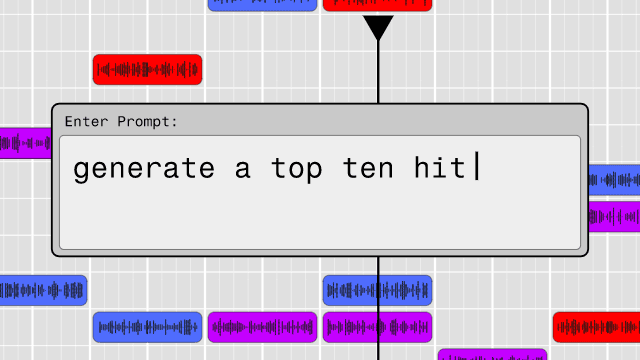
What’s the elevator pitch? “Make any song you can imagine,” Suno’s website touts in glowing white letters—though “imagine” is doing some heavy lifting here. Telekinesis isn’t quite afoot on the platform; it relies on a bank of keywords—partially informed by a list of favored “genres” you select when you sign up—which its deep-language learning model then translates into rhythm, vocals, instrumentation, and mood. Users are encouraged to add details to direct the tech, but in Suno’s “Advanced” mode, the possibilities expand, allowing you to adjust for “weirdness and style influence.” Whatever the success rate, the churn potential is infinite (the platform claims to make around seven million songs per day). When I tried my hand at “electroclash, overtly political party anthem with sexy spoken word female vocals a la Peaches or Uffie,” I ended up with a song titled “Glitter Guillotine,” anchored around a generic four-on-the-floor and bass-guitar lick I can only describe as “Cake By The Ocean – Alexa’s Version,” with such insightful, empire-dismantling lyrics as “High heel on the constitution / Lip gloss revolution.”
Walled garden model? No, and unlike Udio, which ceded some of its distribution capabilities on the way to appeasing the majors, Suno has stood by its right to let users download whatever they wish.
Any other claims to fame? Suno is far and away the most visible AI company in the industry right now, in no small part because of its headline-making investments. The Mississippi songwriter behind Xania Monet, an AI “artist” a la Lil Miquela or the ill-fated dog whistle FN Meka, uses Suno; so does the fully AI band Breaking Rust. It’s also the platform that birthed “We Are Charlie Kirk,” the heavily memed 2025 memoriam track that topped Spotify’s Viral 50 chart.
Has it been sued yet? Yes, and plenty. Universal and Sony both still have active copyright infringement suits against the company. But a recent settlement with Warner could mean more boardroom handshakes are imminent.
Which labels/artists have they partnered with? Warner’s settlement arrived as a licensing partnership. Although it’s not technically an official opt-in, the label represents artists like Dua Lipa, Charli XCX, and Dijon, meaning Suno could train on all of their music.
Udio
When did it launch? April 2024
Who’s behind it? A cohort of former Google DeepMind researchers—David Ding, Conor Durkan, Charlie Nash, Yaroslav Ganin, and Andrew Sanchez—with significant financial backing from venture capital firm Andreessen Horowitz.
What’s the elevator pitch? Like Suno, Udio promises fully realized, high-speed generated music based off a library of text prompts. Ask for a Sabrina Carpenter track about foreplay that sounds like it was written by the Red Hot Chili Peppers, and you’ll have multiple demos to choose from in mere minutes.
PakarPBN
A Private Blog Network (PBN) is a collection of websites that are controlled by a single individual or organization and used primarily to build backlinks to a “money site” in order to influence its ranking in search engines such as Google. The core idea behind a PBN is based on the importance of backlinks in Google’s ranking algorithm. Since Google views backlinks as signals of authority and trust, some website owners attempt to artificially create these signals through a controlled network of sites.
In a typical PBN setup, the owner acquires expired or aged domains that already have existing authority, backlinks, and history. These domains are rebuilt with new content and hosted separately, often using different IP addresses, hosting providers, themes, and ownership details to make them appear unrelated. Within the content published on these sites, links are strategically placed that point to the main website the owner wants to rank higher. By doing this, the owner attempts to pass link equity (also known as “link juice”) from the PBN sites to the target website.
The purpose of a PBN is to give the impression that the target website is naturally earning links from multiple independent sources. If done effectively, this can temporarily improve keyword rankings, increase organic visibility, and drive more traffic from search results.
Jasa Backlink
Download Anime Batch
Baca Juga Yang Menarik Lainnya
 A Guide to the Music Festivals of Summer and Fall 2025 – Warungku Terkini
 Listen to TyBass’ “Anguilla” [ft. Lsdvas]: New Rap Music Today – Warungku Terkini
 Listen to Baby Fifty’s “Stop Barrin on the Men”: New Rap Music Today – Warungku Terkini
 Listen to Cash Cobain & Bay Swag’s “Fisherrr”: New Rap Music Today – Warungku Terkini
