
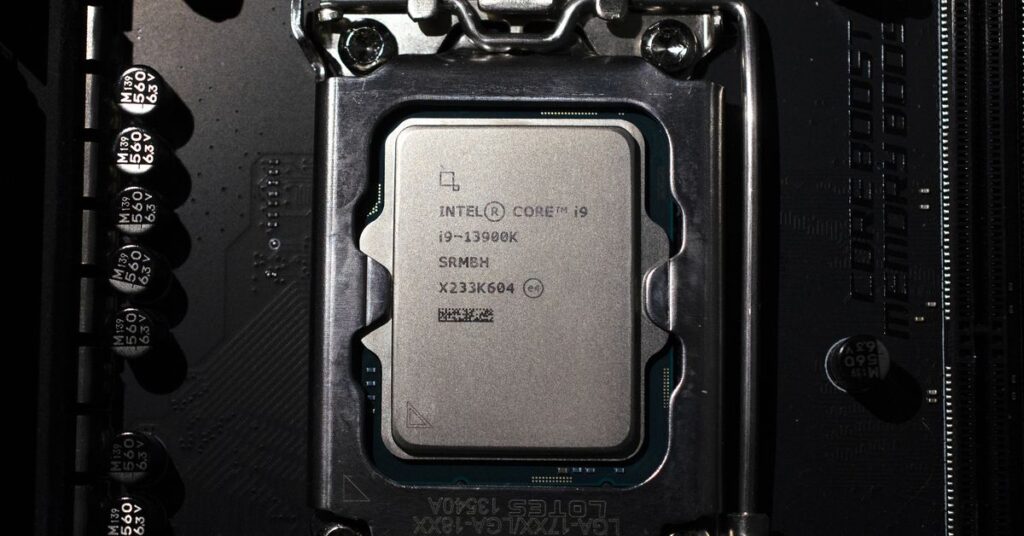
For months, Intel’s highest-end desktop gaming processors have had a strange tendency to occasionally make games crash — and despite what you might have seen earlier today, Intel says it doesn’t have a final fix for its 13th and 14th Gen Intel Core i9 “Raptor Lake” and “Raptor Lake S” chips just yet.
“Contrary to recent media reports, Intel has not confirmed root cause and is continuing, with its partners, to investigate user reports regarding instability issues on unlocked Intel Core 13th and 14th generation (K/KF/KS) desktop processors,” reads a statement via Intel spokesperson Thomas Hannaford.
It continues: “The microcode patch referenced in press reports fixes an eTVB bug discovered by Intel while investigating the instability reports. While this issue is potentially contributing to instability, it is not the root cause.”
Intel’s official statement references (and partially confirms) leaked internal Intel documents obtained by Igor’s Lab earlier today. Those documents suggest that part of the problem is how Intel’s chips have been erroneously overclocking their own cores, using a feature called Enhanced Thermal Velocity Boost (eTVB), even when they should have known they were running too hot to do that.
“Root cause is an incorrect value in a microcode algorithm associated with the eTVB feature,” that leaked document began. It continued:
Failure Analysis (FA) of 13th and 14th Generation K SKU processors indicates a shift in minimum operating voltage on affected processors resulting from cumulative exposure to elevated core voltages. Intel® analysis has determined a confirmed contributing factor for this issue is elevated voltage input to the processor due to previous BIOS settings which allow the processor to operate at turbo frequencies and voltages even while the processor is at a high temperature. Previous generations of Intel® K SKU processors were less sensitive to these type of settings due to lower default operating voltage and frequency.
Intel® requests all customers to update BIOS to microcode 0x125 or later by 7/19/2024.
This microcode includes an eTVB fix for an issue which may allow the processor to enter a higher performance state even when the processor temperature has exceeded eTVB thresholds.
But while Intel confirms eTVB was potentially part of the problem, it’s apparently not the “root cause” of the whole issue.
Here’s hoping we get a full fix soon.
Info Teknologi Terbaru
laptop asus terbaru, laptop hp terbaru, laptop lenovo terbaru, laptop acer terbaru, laptop asus terbaru 2021, laptop terbaru 2021, harga laptop terbaru, laptop terbaru 2022, laptop terbaru, laptop samsung terbaru, laptop dell terbaru, asus laptop terbaru, laptop lenovo terbaru 2021, harga laptop hp terbaru, harga laptop asus terbaru, laptop toshiba terbaru, harga laptop terbaru 2021, harga laptop lenovo terbaru, laptop xiaomi terbaru, laptop hp terbaru 2021, laptop asus terbaru 2022, harga laptop acer terbaru, laptop lenovo terbaru 3 jutaan, harga laptop asus terbaru 2021, laptop terbaru 2021 dan harganya, laptop samsung terbaru 2021, lenovo laptop terbaru, laptop asus terbaru 2021 harga 5 jutaan, laptop apple terbaru, laptop acer terbaru 2021 dan harganya, laptop asus terbaru warna pink, laptop rog terbaru, laptop asus terbaru 2021 dan harganya, laptop terbaru 2022 dan harganya, laptop dell terbaru 2021, harga laptop terbaru 2022 dan spesifikasinya, laptop hp terbaru 2022, laptop keluaran terbaru, harga laptop lenovo terbaru 2021, laptop hp terbaru 2021 dan harganya, asus terbaru laptop, laptop acer terbaru 2021, laptop asus terbaru 2020 harga 5 jutaan, laptop hp terbaru tipis, harga laptop dell terbaru 2021, harga laptop acer terbaru 2021, laptop zyrex terbaru, laptop asus terbaru 2020, lenovo terbaru laptop, laptop keluaran terbaru 2021
Baca Juga Yang Menarik Lainnya
 Timeline Twitter For You sekarang juga muncul di browser desktop
– Warungku Teknologi
Timeline Twitter For You sekarang juga muncul di browser desktop
– Warungku Teknologi
 Google AMP: how Google tried to fix the web by taking it over – Warungku Teknologi
 Cara berdagang di MacBook, desktop macOS, iPhone atau iPad Anda
– Warungku Teknologi
Cara berdagang di MacBook, desktop macOS, iPhone atau iPad Anda
– Warungku Teknologi
 Alienware’s new Aurora R16 desktop sheds gobs of plastic for a 40 percent smaller build – Warungku Teknologi